
Written by Prof Dr. Mohd Yazid bin Yahya
Edited by Ts. Dr. Muhammad Asyraf bin Muhammad Rizal
The increasing demand for lightweight yet high-strength structural materials has driven significant interest in hybrid composite systems capable of maintaining superior performance under extreme loading conditions. In response to this need, researchers from the Centre for Advanced Composite Materials (CACM) at Universiti Teknologi Malaysia (UTM) have developed a novel hybrid flax fibre/wire-mesh steel cylindrical composite tube designed to achieve enhanced energy absorption and crashworthiness. This innovative work was undertaken by Ahmad Tantoon, a Master of Science (Mechanical Engineering) student, under the supervision of Prof. Dr. Mohd Yazid Yahya, the Director of CACM at UTM.
Composite materials have long been recognized for their high specific strength, stiffness, and energy absorption potential, particularly in impact-resistant applications. However, conventional fibre-reinforced composites, such as those reinforced with glass or carbon fibres, often exhibit brittleness and limited strain-to-failure, leading to sudden, catastrophic fracture under compressive or impact loading. To address these limitations, the hybridization of natural fibres with metallic reinforcements has emerged as an effective approach, combining the ductility and energy dissipation capacity of metals with the lightweight and stiffness advantages of fibre composites.
In this research, flax fibre was selected as the primary natural reinforcement owing to its renewability, low density, and favourable mechanical properties. To complement its stiffness and improve the composite’s ductility, layers of stainless-steel wire mesh (T304) were incorporated into the composite architecture. The inclusion of wire mesh was characterized by high tensile strength, corrosion resistance, and excellent elongation at break (up to 20%), enabling the hybrid tube to sustain progressive deformation during axial compression and reducing the risk of brittle fracture. This synergistic reinforcement strategy enables the hybrid composite to exhibit both high stiffness and controlled plastic deformation, thereby optimizing its energy-absorption characteristics.
The hybrid flax/wire-mesh composite tubes were fabricated using the vacuum infusion technique, with Epicote 1006 epoxy resin as the polymer matrix. The fabrication process involved a systematic layup of alternating flax fibre and wire mesh layers around a cylindrical mandrel, followed by vacuum-assisted resin impregnation and thermal curing. After curing, the composite tubes were demoulded, sectioned, and prepared for quasi-static axial compression testing using an INSTRON DX660 servo-hydraulic testing machine operating at a constant crosshead speed of 5 mm/min.
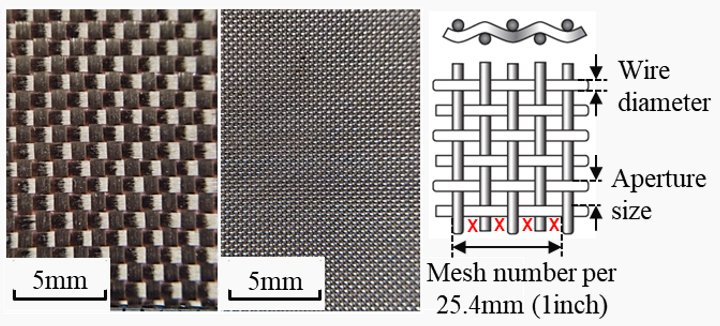
The experimental findings revealed notable improvements in energy absorption (EA), specific energy absorption (SEA), and crash force efficiency (CFE) for the hybrid composites compared to their non-hybrid counterparts. Tube diameter was found to play a critical role in determining crashworthiness performance. For non-hybrid flax fibre tubes, the highest CFE value of 0.49 was achieved at a 75 mm diameter. In contrast, the hybrid flax/wire mesh tubes reached optimum performance at a 65 mm diameter, displaying a 47.83% increase in CFE relative to the non-hybrid configuration. However, further increases in diameter beyond this threshold led to a decline in CFE, attributed to unstable deformation and reduced interlaminar shear strength.
In terms of energy absorption, the steel wire mesh/flax fibre composite tubes with a 65 mm diameter exhibited the highest performance, with absolute energy absorption and specific energy absorption values 33.41% and 26.93% higher, respectively, than those of the 55 mm tubes. At this optimal diameter, the hybrid tubes also demonstrated 70.04% greater absolute energy absorption and 25.23% higher SEA compared to pure flax fibre tubes. These results indicate that the integration of wire mesh reinforcement, together with optimal geometric design, significantly enhances both the energy dissipation capability and crashworthiness of the composite structure.
All tested composite tubes displayed similar progressive deformation modes, characterised by longitudinal splitting and outward buckling along the tube midsection — a behaviour indicative of controlled, stable energy absorption. The hybrid flax/wire mesh configuration exhibited superior energy dissipation due to its combined ductile–brittle deformation response, effectively mitigating catastrophic failure and promoting uniform load transfer throughout the crushing event.
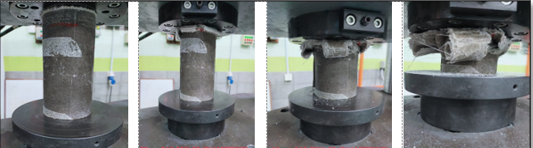
Overall, this study highlights the potential of hybrid natural fibre/metallic composite systems in advancing energy-absorbing structural technologies. The integration of flax fibres and wire mesh has been shown to markedly improve mechanical stability, crash performance, and failure controllability under axial loading. These findings demonstrate that hybridisation can effectively overcome the intrinsic brittleness of traditional fibre composites, paving the way for the design of next-generation lightweight crashworthy components in automotive, aerospace, and defence applications. This innovation aligns with UTM and FKM’s ongoing mission to develop sustainable, high-performance materials that bridge the gap between advanced engineering design and green technology solutions.

Prof Dr. Mohd Yazid bin Yahya
Director
Centre for Advanced Composite Materials Universiti Teknologi Malaysia
